
Identity is not a single thing. It is a layered system that adapts, reorganises, and evolves over time.
Most people experience identity as one solid sense of “me”.
In reality, identity is made up of distinct layers that interact with one another — some innate, some shaped by life, and some formed through meaning and relationship.
Understanding identity as layered changes how we approach inner work.
Instead of trying to fix or optimise who we think we are, we learn to see which layer is active, what it is responding to, and how identity is organising itself in the present moment.
This framework is the foundation of my work.
Model by renata clarke
The three layers of identity
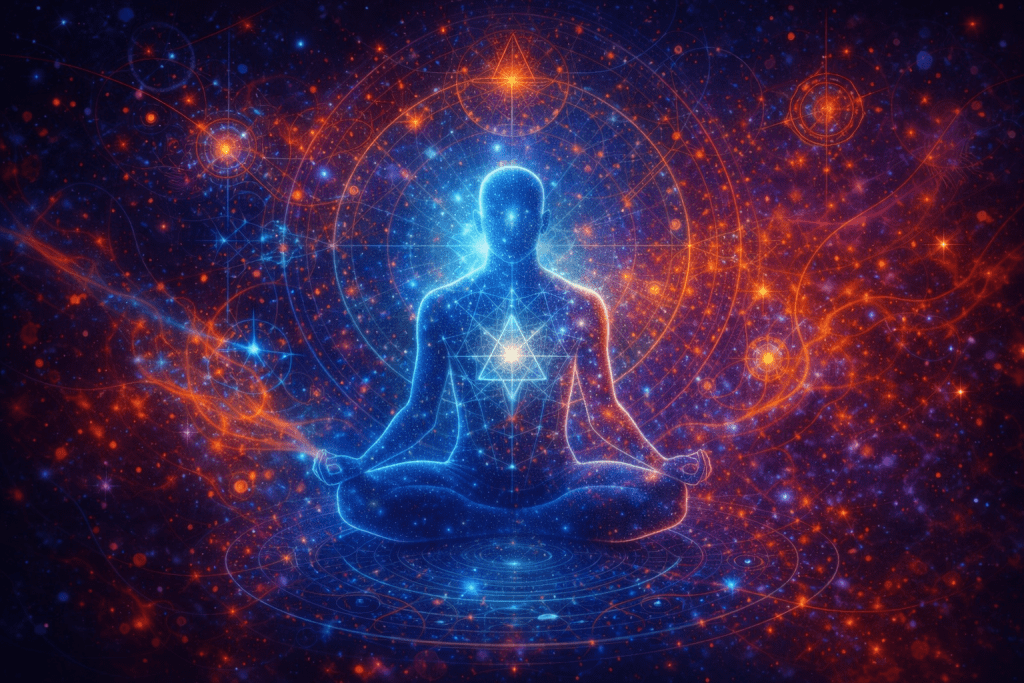
LAYER ONE – Structural Baseline Identity (Zero Point Blueprint)
This is the identity architecture you are born with.
It describes innate orientations, capacities, sensitivities, and ranges of expression. It is not a personality, not a role, and not a finished self. It does not dictate outcomes or life paths.
Think of it as a structural baseline rather than a fixed identity.
This layer can mature, distort, or remain partially inaccessible depending on life experience, but it does not disappear. It is the reference point identity returns to when adaptive layers loosen.
This layer cannot be proven in a laboratory sense. It is inferred through consistency across lived experience, pattern observation over time, and repeated alignment between inner capacity and authentic expression.
Psychology recognises innate temperament and predisposition, but rarely explores this layer directly. In my work, it is mapped deliberately, because without a structural baseline, identity work lacks orientation.
For many people, this layer is not consciously accessible early in life, which is why it is often mistaken as nonexistent rather than obscured.

Layer Two – Adaptive Identity Organisation
This layer describes how identity meets life.
It includes emotional responses, behavioural strategies, relational orientation, nervous system patterns, and ways of regulating, engaging, withdrawing, asserting, or protecting.
Before conscious work, adaptation is often survival-based. Identity organises itself around safety, attachment, and threat.
After conscious work, this layer does not disappear. It matures.
Adaptation shifts from unconscious survival strategies to conscious, responsive ways of engaging with life.
This layer is not identity in essence, but it organises how identity is expressed under specific conditions. It is always present. What changes is whether it is rigid or flexible, fear-driven or choice-based.
This is why identity continues to move even after healing and integration.
Layer Three – Narrative and Relational Identity
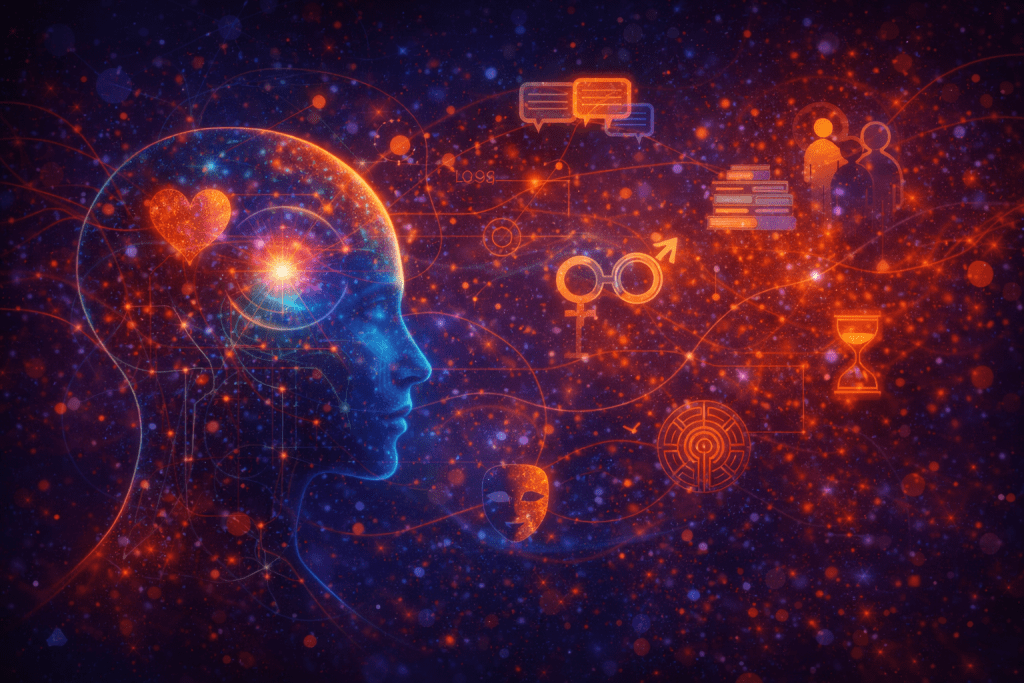
This is the story identity tells about itself.
It includes beliefs, values, roles, labels, self-concept, autobiographical memory, and the meaning we assign to our experiences.
This layer is also relational. It is shaped through mirroring, belonging, culture, and the language other people use about us — and that we use about ourselves.
Narrative helps identity become socially legible, but it is the least stable layer and the most influenced by context.
Much conventional personal development focuses almost exclusively on this layer.
Where personality fits
Personality is related to identity, but it is not identical to it.
Personality usually refers to relatively stable traits and temperamental tendencies. In this model, personality is shaped by the structural baseline, expressed through adaptive organisation, and described through narrative.
In other words, personality spans the layers.
It is not a layer of its own.

How the layers interact
These layers are not separate in lived experience. They interact continuously.
Confusion arises when one layer is mistaken for the whole.
For example:
- Changing beliefs without addressing adaptation rarely lasts
- Regulating the nervous system without identity orientation can stall
- Expanding consciousness without identity reorganisation can destabilise
Clarity comes from knowing which layer you are actually working with.
Consciousness, emotion, energETIC FIELD, and the body
Identity does not exist in isolation. Consciousness is the field in which identity is perceived and reflected. It can expand rapidly, but it does not automatically reorganise identity.
Emotions move through all layers. They are not identity themselves, but they carry information about coherence, constraint, and adaptation.
The nervous system strongly influences which adaptive patterns dominate at any given time. It does not define identity, but it selects how identity is lived under pressure.
The body is the medium through which identity is experienced and expressed.
The energetic field reflects how coherent or fragmented the identity system is across layers, not just what someone thinks or believes.
None of these are identity. All of them shape identity expression.
How this model relates to psychology
Psychology offers valuable insight into adaptation, attachment, trauma, and narrative formation. Much of what happens in the adaptive and narrative layers is well described in psychological frameworks.
What is often missing is a clear model of innate identity architecture and how identity reorganises after awareness expands.
This framework does not replace psychology.
It extends the map.
It offers a way to understand why people can be insightful, regulated, and self-aware, yet still experience identity instability and ongoing change.
On the origin of this framework
This model did not emerge from studying existing identity theories, completing coaching lineages, or adapting therapeutic frameworks. It developed through lived experience, long-term observation, intuitive insight, and direct engagement with identity reorganisation over time.
Only later was it checked against existing psychological and spiritual models — not to align with them, but to understand where it converges, where it expands, and where it names aspects of identity that are often avoided or left undefined.

Why this framework matters
When identity is misunderstood, people push harder, seek clarity prematurely, or try to stabilise what is already changing.
When identity is understood as layered and adaptive, effort drops away. Instability becomes intelligible. Integration is no longer treated as an endpoint.
People stop trying to become someone else and start learning how their identity actually works.
This model is the foundation for the Identity Blueprint, personal alignment work, and the further frameworks on identity restoration and evolution.