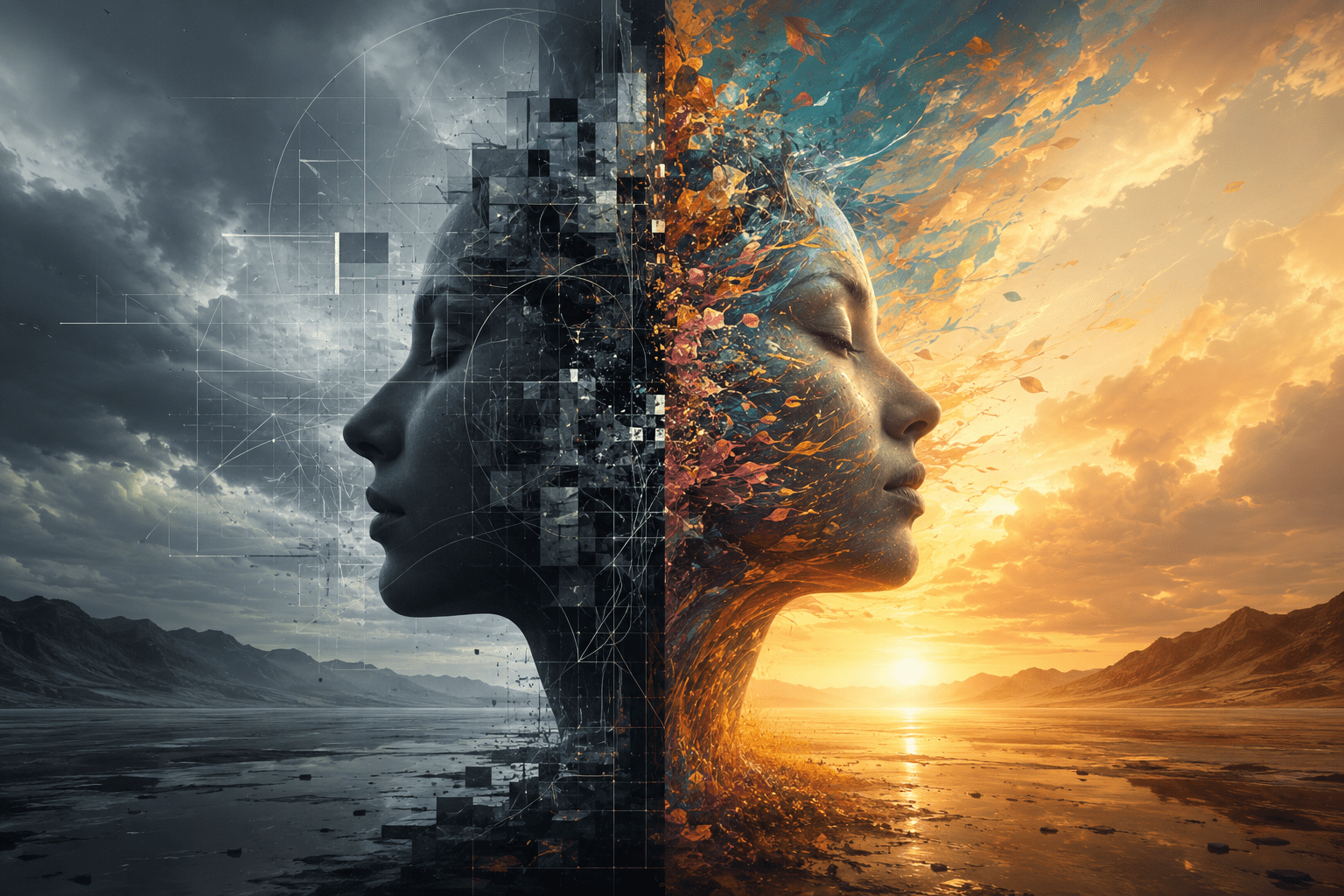
The Difference Between Personality and Identity
Many people use identity and personality as though they mean the same thing. In this article, identity researcher Renata Clarke explores why personality describes patterns of expression while identity refers to the deeper organising structure that shapes how those patterns emerge. Understanding this distinction may change how we think about personal development, self-understanding, and lasting change.
The Assumption I Never Questioned
For most of my life, I never really differentiated between personality and identity.
Like many people, I assumed my personality was simply who I was. If someone had asked me to describe myself, I would have reached for the familiar language we all tend to use. I might have said that I was introverted or extroverted, analytical or creative, independent or sensitive. These descriptions felt meaningful because they reflected genuine patterns in my experience. They seemed to explain why I responded to life in certain ways and why I often felt different from other people.
For a long time, that understanding felt complete enough.
It was only when I began researching identity more deeply that I noticed something I had never questioned before. Identity and personality were often being treated as though they were interchangeable, as though they referred to the same thing. Yet the more closely I examined the distinction, the less convinced I became that they were describing the same phenomenon at all.
The assumption is so deeply embedded in everyday thinking that most people never stop to examine it.
When someone asks who you are, the answers often sound remarkably similar to the descriptions found in personality frameworks. We describe ourselves as introverted, creative, highly sensitive, analytical, independent, sociable, ambitious, or thoughtful. These descriptions can be useful because they often contain genuine insight. They help us recognise recurring patterns in ourselves and make sense of our experiences.
But over time I began to wonder whether these descriptions were actually explaining who we are, or whether they were simply describing how we tend to express ourselves.
The Limits of Personality
The longer I observe people, the harder it becomes to ignore this distinction.
I have seen people with remarkably similar personalities build completely different lives. I have seen individuals who appear equally thoughtful, creative, reflective, and sensitive move through the world in radically different ways.
Some become leaders, while others become artists. Some become healers, while others become researchers. Some spend decades adapting themselves to environments that were never truly right for them.
Some seem naturally drawn toward increasing complexity and responsibility, while others organise themselves around safety, certainty, or belonging.
These differences cannot always be explained by personality alone.
Personality clearly matters. It influences how we interact with the world and how others experience us. Yet it does not seem sufficient to explain the deeper patterns that shape the direction of a person’s life. Something else appears to be operating underneath.
The issue may not be that personality is wrong. The issue may be that personality and identity are describing different layers of human experience.
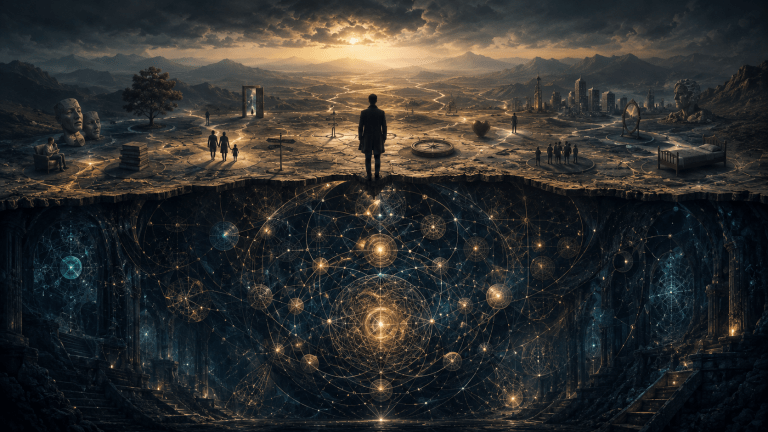
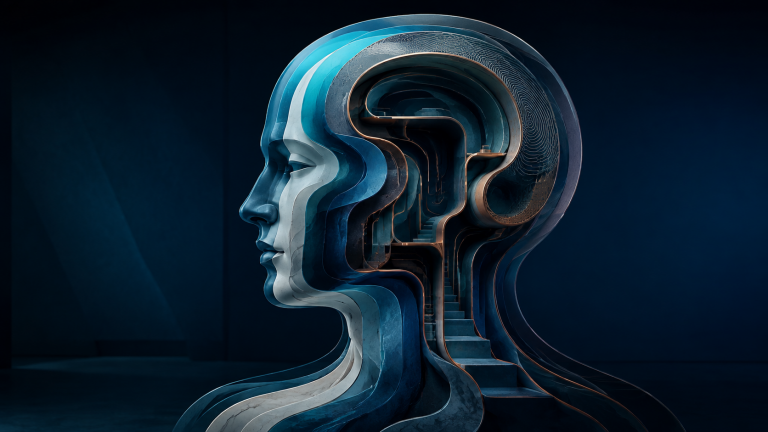
Personality describes patterns that can be observed, while identity may be the structure that organises those patterns.
What Personality Frameworks Actually Measure
This distinction becomes easier to see when we look more closely at what personality models are actually measuring.
Most personality frameworks focus on tendencies. They measure how open someone is to new experiences, how emotionally reactive they tend to be, how sociable they are, how organised they are, how they process information, and how they typically interact with other people.
All of this can be incredibly useful.
These frameworks often provide language for experiences that previously felt difficult to articulate. They can help people understand themselves and others more clearly. They can reveal strengths, blind spots, preferences, and recurring behavioural patterns.
But they are still describing expression.
They are describing what tends to happen. They are describing the visible patterns that emerge in a person’s life. What they do not necessarily describe is the organising structure that makes those expressions more likely in the first place.
Personality tells us something about the way a person shows up in the world, but it does not necessarily tell us what is organising that way of showing up.
This becomes particularly important when adaptation enters the picture. Some of the patterns people describe as personality may have very little to do with identity at all.
Conflict avoidance can look like an easy-going personality. Hyper-independence can look like strength. Emotional distance can look like calmness. Relentless responsibility can look like character.
The description may be accurate. What remains unclear is whether we are observing identity, adaptation, or some combination of the two.
The House Analogy
Imagine two houses.
From the outside they look remarkably similar. They have similar dimensions, similar windows, and similar architectural features. At first glance they appear almost identical.
Then you step inside. One house is organised around large open spaces and natural gathering points. The flow encourages connection, movement, and interaction. The other is organised around separation, privacy, and containment. The rooms are arranged differently. The movement through the space feels different. The experience of living there would be fundamentally different.
From the outside, the houses may appear almost the same. Internally, however, they are organised according to entirely different principles.
People can be like this too. Two individuals may appear equally confident, equally intelligent, or equally creative while being organised by very different underlying structures. The visible expression may look similar, but the organising logic may not.
This is where I believe identity becomes a useful concept.
Identity as an Organising Structure
When I use the word identity, I am not referring to self-image. I am not referring to labels, roles, or personality types.
Instead, I am referring to identity as an organising structure. In the framework I am developing, identity refers to the organising structure that shapes how a person perceives, responds to, and expresses life. It influences what tends to emerge naturally, what requires effort, what repeatedly becomes important, and how a person adapts, develops, and expresses themselves over time.
Identity is not behaviour. It is not belief. It is not narrative. It is not personality. Those things matter, but they operate at different levels.
Identity is what makes certain patterns feel natural, certain capacities more available, certain tensions more likely, and certain developmental pathways more relevant. It influences expression without being reducible to expression.
This does not mean every persistent pattern reflects identity. Some adaptive strategies remain in place for decades and can appear just as stable as core tendencies. The question is not simply whether a pattern repeats, but what role it plays in the organisation of the system.
In other words, personality may be what we see, while identity may be part of what is organising what we see.
Why This Distinction Matters
One reason this distinction matters is that personality can change considerably across a lifetime.
Someone who was once shy may become socially confident. Someone who was highly reactive may become emotionally stable. Someone who spent years organised around pleasing others may develop stronger boundaries and greater autonomy. Someone who once avoided visibility may eventually become comfortable leading, teaching, or creating publicly.
These changes are real.
Yet when people describe these experiences, they often say something interesting. They say they feel more like themselves than before. Not less. More.
This creates a problem if personality and identity are the same thing. How can someone become more fully themselves while many of their visible personality traits have changed?
One possible explanation is that personality is not identity. What changed was not necessarily the underlying structure. What changed was access.
Capacities that were previously constrained by adaptation, fear, conditioning, or circumstance became more available. What appeared from the outside as a new personality may have been a different relationship to the same underlying structure.
Access to different capacities. Access to different ways of expressing those capacities. Access to parts of themselves that had previously been constrained, distorted, or organised around adaptation.
The person did not become someone else. The system through which identity was expressed reorganised.
The Question Beneath the Traits
This distinction also helps explain why so many people eventually reach a point where personality descriptions stop feeling sufficient.
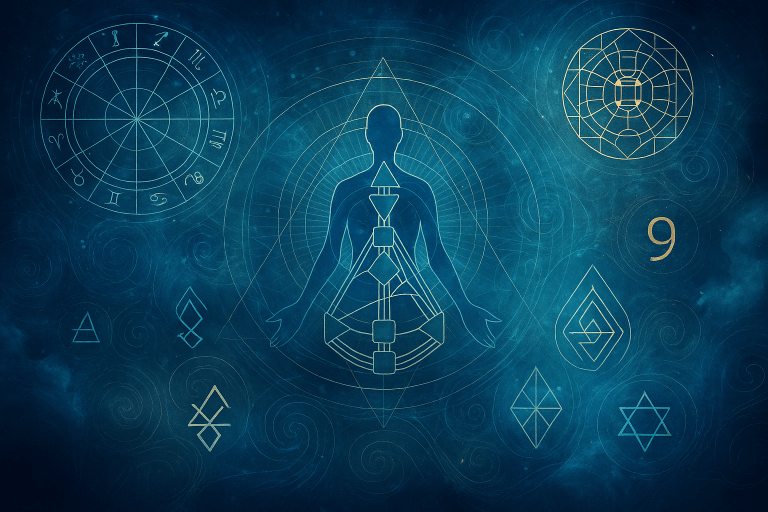
They know their traits. They know their strengths. They know their weaknesses. They understand their attachment style and their behavioural patterns. They may know their personality type, their Human Design profile, their Enneagram number, their astrological placements, and half a dozen other frameworks. Yet something still feels unresolved.
Not because those frameworks are useless. Many of them can provide valuable insight. But knowing how you tend to behave is not necessarily the same thing as understanding what is organising that behaviour.
At some point the question begins to shift. Instead of asking, “What kind of person am I?” the deeper question becomes, “What is actually organising me?”
What remains consistent beneath changing roles, changing narratives, changing beliefs, and changing life circumstances? What remains when adaptation loosens? What remains when old explanations stop feeling sufficient?
These questions point toward something deeper than personality.
They point toward identity.
Looking Beneath Expression
That is the territory that interests me. Not because personality is unimportant, but because personality sits downstream from something more fundamental.
If we mistake expression for structure, we may spend years refining how we appear without understanding what is actually organising our lives. We may become increasingly skilled at describing ourselves while remaining unclear about the deeper forces shaping our choices, relationships, and development.
Personality can tell us a great deal about how someone tends to express themselves. Identity may help explain why those expressions take the shape they do.
The two are related, but they are not the same thing.

If You Want To Explore This Further
Many people try to resolve this through changing what they do.
But until you begin to understand what your sense of direction depends upon, external changes may reproduce the same uncertainty in a different form.
The Identity Blueprint offers an optional starting point: provisional hypotheses about possible structural tendencies, adaptive patterns and useful lines of enquiry. It can support self-led observation or provide orientation before Identity Development Sessions, but it does not determine what is structural or perform that differentiation on its own.