When Consciousness Expands Faster Than Identity Can Reorganise
For many people on a conscious path, expansion is not the problem.
Awareness opens. Insight deepens. Old narratives fall away. Perception sharpens. There is a sense of seeing more, understanding more, and standing outside of patterns that once felt binding.
And then something unexpected happens.
Life starts to feel disjointed. Identity feels unstable. Decisions become harder rather than easier. There is a sense of not knowing who you are anymore, even though you are more aware than ever.
This is often interpreted as resistance, unfinished healing, or a failure to integrate what has been seen.
I understand it differently.
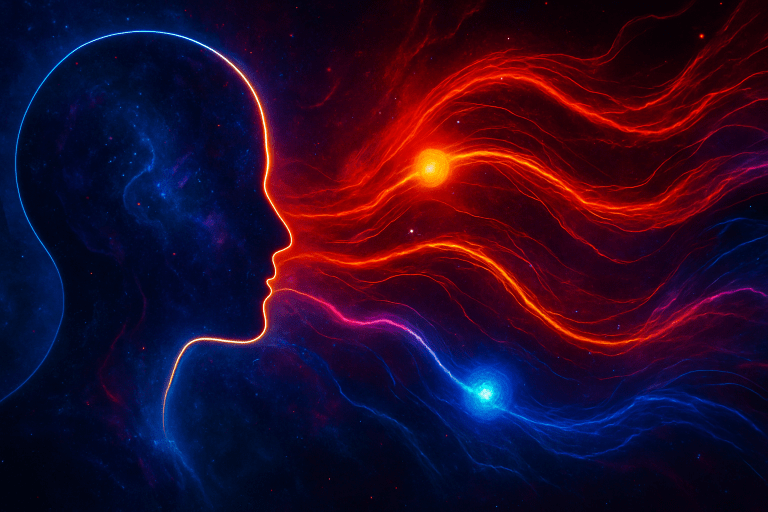
In many cases, consciousness has expanded faster than identity has had time to reorganise.
Consciousness and identity are not the same thing
Consciousness and identity are closely related, but they are not interchangeable.
Consciousness refers to awareness itself. The capacity to witness, perceive, and know. It can expand quickly, sometimes suddenly, through insight, spiritual practice, crisis, or deep inner work.
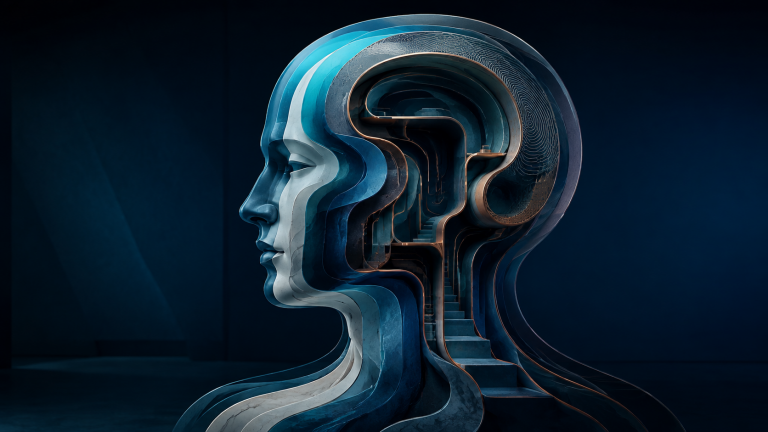
Identity is the system through which consciousness is lived.
It includes:
- self-concept
- emotional patterns
- relational orientation
- habits and preferences
- roles and adaptive strategies
Identity has structure. It has history. It carries emotional and relational memory.
When consciousness expands, identity does not automatically reorganise to match it.
This distinction is rarely made explicit, yet it explains a great deal of confusion in conscious and spiritual communities.
The gap between insight and lived reality
When awareness expands rapidly, people often experience a gap.
They can see patterns clearly but do not know how to live differently yet. They understand their conditioning, but still feel it operating. They sense what no longer fits, but have not yet formed a new way of being.
This gap can feel uncomfortable, even alarming.
Questions arise:
Why does life feel harder when I see more?
Why does clarity dissolve instead of stabilise?
Why do I feel less defined, not more?
Without a framework for identity reorganisation, this phase is often mislabelled as regression or instability.
In reality, it is a normal response to structural mismatch.
Identity reorganises more slowly than awareness
Awareness can shift in moments. Identity tends to move in phases.
Identity must:
- loosen existing structures
- release outdated adaptations
- renegotiate emotional and relational patterns
- experiment with new configurations
This takes time.
It also requires periods of instability, where old identities no longer function but new ones are not yet formed.
Trying to force identity to catch up through effort, affirmation, or performance often increases tension. People push themselves to live from insight before the system is ready to hold it.
This is not a moral failure or lack of discipline. It is a systems issue.

Why high consciousness work can feel destabilising
Many high consciousness approaches assume that expanded awareness naturally leads to embodiment.
Sometimes it does. Often it does not.
When identity is not consciously addressed, people may experience:
- emotional volatility
- loss of motivation
- difficulty making decisions
- a sense of fragmentation
- disconnection from previous goals or roles
These experiences are often pathologised or spiritualised.
They are neither.
They are signs that identity is in the process of reorganising.
Integration is not the same as reorganisation
Integration is often understood as bringing parts into harmony.
Reorganisation is different.
Reorganisation involves the system changing its structure.
This may include:
- letting go of roles that once provided stability
- revisiting emotional material that seemed resolved
- feeling temporarily less capable or less defined
- moving away from identities that once felt aligned
Integration can occur many times within a lifetime. Reorganisation tends to follow moments of significant awareness expansion.
The mistake is assuming integration completes the process.
Often, it begins the next phase.
Liminal identity states are not failures
When identity is reorganising, people often find themselves in liminal states.
They are no longer who they were, but not yet who they are becoming.
Language fails here. Labels feel inadequate. Attempts to define oneself feel premature.
These states are deeply uncomfortable in a culture that values clarity, productivity, and self-definition.
But liminal phases are valid identity states.
They are not something to rush through or fix.
They are where the system renegotiates itself.
What happens when identity is forced to stabilise
When people cannot tolerate liminality, they often force identity into premature coherence.
This can look like:
- adopting a new role or label too quickly
- clinging to a spiritual or professional identity
- over-identifying with insight
- bypassing emotional or relational tension
The result may look stable on the surface, but it is often brittle.
Identity becomes something to maintain rather than something to inhabit.
Over time, this usually leads to another collapse.
Working with identity consciously
If consciousness can expand faster than identity reorganises, then conscious evolution requires more than awareness.
It requires learning how to work with identity itself.
This does not mean controlling or fixing identity.
It means:
- recognising which phase you are in
- understanding when instability is functional
- allowing identity to loosen without panicking
- resisting the urge to define too soon
It also means holding responsibility for how insight is lived, rather than expecting insight to do the work on its own.
Why this distinction matters
Without understanding the difference between consciousness and identity, people often blame themselves for processes that are structural.
They think something is wrong when identity dissolves after insight. They chase clarity when the system is asking for space. They doubt their path when what is actually happening is reorganisation.
Understanding this distinction does not remove discomfort.
But it removes unnecessary self-judgement.
It allows people to stay present with change without forcing premature stability.
Consciousness can open in an instant.
Identity takes time to catch up.
When this difference is understood, periods of confusion and instability are no longer treated as failures. They are recognised as phases of reorganisation within a living system.
Learning how to work with identity consciously is not about stopping movement.
It is about allowing movement without losing coherence.

If You Can No Longer Return to What Used to Work
Many people experience periods where old explanations stop working.
The patterns that once felt obvious no longer fit.
The strategies that once produced results stop creating movement.
And the question is no longer what to do.
The question becomes:
What is actually organising this?
My work explores identity architecture, structural development, adaptation, internal governance, and the processes through which people reorganise over time.
Whether you’re trying to understand your own patterns, explore your identity blueprint, or contribute to ongoing research, there are several ways to continue the conversation.